
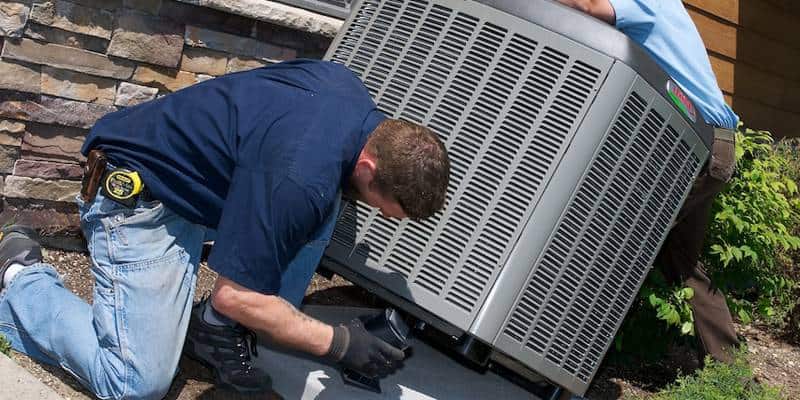
Your air conditioner is the hardest-working appliance in your Florida home. It runs nearly year-round, battling heat and humidity that would disable equipment anywhere else in the country. But even the best systems eventually reach the end of their life. The question isn't if your AC will need replacement, but when.
If you're seeing warning signs that your system is struggling, you're probably wondering about costs. New AC systems aren't cheap, but replacement costs vary dramatically depending on what you choose. You also might qualify for a federal tax credit that cuts $2,000 off the price. Let's walk through everything you need to know.
The Real Lifespan of an AC System in Florida
The national average lifespan for an AC system is 15 to 20 years. Florida is different. Here, your system is working far harder, in far hotter conditions, and with more humidity, which means the clock runs faster.
According to HVAC industry data, a system that runs 1,500 hours per year in a northern climate will last 20 years. That same equipment running 4,000 hours annually in Florida heat wears out in 10 to 15 years. The compressor, condenser coil, and blower motor all degrade faster under constant thermal stress.
For coastal properties from Fernandina Beach to Palm Coast, salt air accelerates corrosion on outdoor units, potentially cutting lifespan down to 7 to 12 years. And if your system hasn't been maintained regularly, you might be looking at replacement sooner.
5 Warning Signs Your AC System Needs Replacement
Not every sign means your system is dead. But when you start seeing multiple warning signs, replacement becomes the smarter choice than continuing to repair. Let's walk through them.
Your System Is Over 12-15 Years Old and Failing
If your AC is in the 12 to 15 year range and you're facing a repair bill, do the math. A compressor replacement or condenser coil repair can cost $1,500 to $3,500. Add in labor, and you're spending serious money on equipment that's already near the end of its expected life. Repair another year or two and you might face another major failure. Replacement makes financial sense.
You're Losing Cooling or the System Won't Cool at All
Weak cooling usually points to low refrigerant (a leak somewhere), a failing compressor, or a clogged condenser. A technician can top off refrigerant for $100 to $500, but if there's a leak, you've got a problem. That leak will keep happening, and you'll keep paying to refill. Meanwhile, the Air Conditioning, Heating, and Refrigeration Institute (AHRI) data shows systems over 10 years old with refrigerant loss are usually worth replacing rather than repairing.
The System Is Running but Your Electric Bill Keeps Rising
Aging AC systems lose efficiency gradually. Dirty coils, worn compressors, and degraded components force the system to work harder to deliver the same cooling. According to the Department of Energy, cooling accounts for 40 to 60 percent of energy use in Florida homes. An inefficient system that's 10 to 12 years old might be costing you $30 to $60 extra per month. Over a year, that's $360 to $720 wasted. A new high-efficiency system pays for itself in energy savings within 7 to 10 years.
The System Needs Frequent Repairs
When you're calling the HVAC technician two or three times a year, replacement is worth considering. The industry rule of thumb: if repair costs exceed 50 percent of the cost of a new system, replace it. A compressor failure alone might run $1,800 to $3,000. If you're already facing repair bills for other issues, you might be past the break-even point already.
You Hear Unusual Noises (Grinding, Squealing, Rattling)
These sounds suggest internal damage to the compressor, blower motor, or bearings. A grinding sound particularly indicates imminent compressor failure. When the compressor goes (the most expensive component to replace), you're looking at $2,000 to $4,000 just for the part and labor. At that cost, replacement is almost always the right move if your system is past 10 years old.
What a New System Actually Costs in 2026
AC replacement prices vary based on system size, efficiency rating, brand, and your home's existing infrastructure. Here's what you can expect to pay in Jacksonville and Northeast Florida.
- SEER2 13-15
- Standard features
- 5-10 year warranty
- Budget-friendly
- SEER2 15-17
- Quieter operation
- 10 year warranty
- Better energy savings
- SEER2 17+
- Smart thermostat
- 10-12 year warranty
- Quietest models
These prices include the indoor and outdoor units, installation labor, thermostat, refrigerant line replacement, and electrical work. Prices vary based on:
System Size: A 3-ton unit (typical for 1,500-2,000 sq ft homes) costs less than a 4 or 5-ton unit. Proper sizing matters for efficiency and performance.
Ductwork Condition: If your existing ducts are damaged, leaky, or require upgrades, add $500 to $2,000 to the estimate. Good ductwork is essential for efficient cooling.
Existing Infrastructure: If the outdoor condenser pad needs repair or your electrical panel needs upgrading for a higher-capacity unit, that adds to the final bill.
Location: Installation in urban Jacksonville typically costs less than installation in rural areas like Palm Coast or Fernandina Beach, where travel time increases labor costs.
SEER2 and What It Means for Your Wallet
If you're researching AC systems, you'll see the acronym SEER2 everywhere. It stands for Seasonal Energy Efficiency Ratio, and it measures how efficiently your air conditioner converts electricity into cooling. The higher the SEER2, the more money you save on energy bills every summer.
Florida has minimum efficiency standards. According to the Florida Building Code and energy standards from the Department of Energy, new systems installed in Florida must meet:
SEER2 14.3 for units under 45,000 BTU (most homes)
SEER2 13.8 for units over 45,000 BTU
These are minimums. You can do better, and you should if the budget allows.
Each SEER2 point above the minimum adds roughly $300 to $500 to your upfront cost. But those points save you 5 to 8 percent annually on cooling costs. A home spending $1,200 per year on cooling can save $60 to $96 per year for every SEER2 point gained.
Here's the federal tax credit that makes this calculation much easier: if you install a qualifying air conditioner with a SEER2 rating of 16 or higher, you qualify for a $2,000 federal income tax credit under Section 25C of the Internal Revenue Code. This is a direct reduction in your taxes, not a rebate. You don't have to earn the credit back through energy savings.
So upgrading from a SEER2 14.3 system ($10,500) to a SEER2 16 system ($11,200) costs $700 more upfront. The federal tax credit covers nearly $2,000 of your cost, plus you save money on every electric bill. It's one of the highest ROI improvements you can make to your home.
The R-410A Clock Is Ticking
If your current AC system uses R-410A refrigerant (the standard for systems installed from 2010 through the early 2020s), you should know what's coming. The EPA is phasing out R-410A production in the United States to comply with the Montreal Protocol.
Refrigerant prices are already climbing as supply tightens. By 2030, R-410A will become increasingly difficult and expensive to find. If you need a refrigerant top-off in the coming years, expect costs to climb. For older systems that develop slow leaks, this economic pressure makes replacement more attractive than limping along with refrigerant top-ups.
The replacement refrigerant is R-454B, and it's already being used in new systems. It's slightly less efficient than R-410A but performs well in Florida heat. If you replace your system now or within the next few years, R-454B will be standard, and you won't have to worry about refrigerant scarcity for the next 15 years.
Florida-Specific Considerations: Humidity, Salt Air, and Constant Use
Jacksonville and Northeast Florida present unique challenges for air conditioning systems that don't exist in most other markets.
Humidity: Florida's average summer humidity is 70 to 80 percent. Your AC doesn't just cool the air; it has to remove massive amounts of moisture. That requires more work from the compressor and condenser coil. A system that would last 18 years in Arizona might last 12 years here because of the constant humidity stress.
Salt Corrosion: If you're within 5 miles of the Atlantic Ocean or the St. Johns River, salt air corrodes outdoor AC components. Copper tubing, aluminum fins, and steel components all degrade faster. Coastal homeowners in Ponte Vedra, Fernandina Beach, and St. Augustine see AC lifespans shortened by 2 to 5 years compared to inland areas.
Year-Round Use: In northern states, AC gets a break in spring and fall. In Florida, you're running your system 8 to 10 months per year. That constant stress accumulates faster than in markets with actual off-seasons for cooling.
New systems are increasingly designed with Florida in mind. Better corrosion-resistant coatings, improved drain systems for high humidity, and compressors rated for continuous high-temperature operation extend lifespan and reliability. When you replace your system, make sure the installer is selecting equipment rated for Florida conditions, not national averages.
Ready to Replace Your AC System?
Get a free estimate from a licensed HVAC contractor in Jacksonville. We'll help you understand your options, qualify for tax credits, and find the right system for your home and budget.
Get Free EstimateSources
- HVAC.com: How Long Do Air Conditioners Last in Florida?
- Energy.gov: SEER2 Standards and Energy Efficiency
- IRS.gov: Section 25C Energy Efficient Home Improvement Credit
- Florida Building Code: HVAC Efficiency Requirements
- AHRI Directory: Air Conditioning Equipment Ratings
- National Weather Service: Florida Climate and Humidity Data
- EPA: R-410A Phase-Down and Replacement Refrigerants